
We talk a lot about restaurant tech, operations, delivery workflows, and the very serious business of keeping orders moving. Fair enough, that’s our world.
But not everything has to be about APIs, margins, and dashboards. Food is also culture, entertainment, nostalgia, weird ideas, and occasionally the kind of fun that makes people leave the house, buy a ticket, order snacks, and happily suspend disbelief for two hours.
We looked less at whether every kitchen detail is perfect and more at whether the story understands how restaurants actually feel: the pressure of service, the weird intimacy of staff culture, the tension between creativity and profit, and the way one bad shift can expose every crack in the operation.
1. The Bear
Carmen "Carmy" Berzatto is an elite, Michelin-chasing chef who has worked in the most punishing fine-dining temples worldwide. But when his older brother dies by suicide, Carmy is forced to return home to Chicago to inherit the family business: The Original Beef of Chicagoland, a grimy, chaotic, and heavily indebted sandwich shop. Trading tweezers and truffles for health inspectors and screaming matches, Carmy attempts to implement a strict "French brigade" system in a kitchen run by a stubborn, deeply resistant crew who absolutely hate him.
The show is a masterclass in capturing the claustrophobia and relentless sensory overload of a commercial kitchen. It explores the toxic pursuit of perfection, the weight of unprocessed grief, and the agonizing process of transforming a dysfunctional group of line cooks into a loyal team.
Iconic hook: There is a legendary, anxiety-inducing episode shot entirely in one continuous take, where the new pre-order system glitches and vomits an endless stream of tickets, plunging the kitchen into absolute, screaming anarchy.
2. Waiting...
If The Bear is about the trauma of the kitchen, Waiting... is the unfiltered, hyper-accurate documentary of the front-of-house staff. Set over the course of a single, chaotic shift at "Shenaniganz," a fictional corporate chain restaurant, the movie follows a motley crew of cynical waiters, exhausted cooks, and overly enthusiastic managers who are all stuck in the purgatory of the hospitality industry.
The story centers on a fast-moving ensemble of servers and cooks navigating the unwritten rules of surviving the floor. It perfectly nails the universal archetypes of casual dining: dealing with nightmare customers, faking the "hospitality smile," and the crude, behind-the-scenes brotherhood that forms by the dumpsters out back.
Iconic hook: The excruciating dynamic of the "send-it-back" lady — a guest who complains about her perfectly cooked steak purely to assert dominance — and the ultimate revenge the kitchen takes when the dining room doors swing shut.
3. Big Night
Set in the 1950s on the New Jersey shore, this poignant drama follows two Italian immigrant brothers, Primo and Secondo, as they struggle to keep their authentic restaurant, Paradise, afloat. Primo is a brilliant, uncompromising chef who refuses to bastardize his homeland's cuisine for American palates that just want cheap spaghetti and meatballs. Secondo, the pragmatic frontman, desperately tries to balance the books, charm the guests, and shield his brother from the impending bank foreclosure.
To save their failing business, they gamble everything they have left on one final, extravagant feast — a Big Night— hoping to impress a famous jazz musician who supposedly has a reservation. It is a beautiful, heartbreaking exploration of the eternal tension between true culinary art and commercial survival.
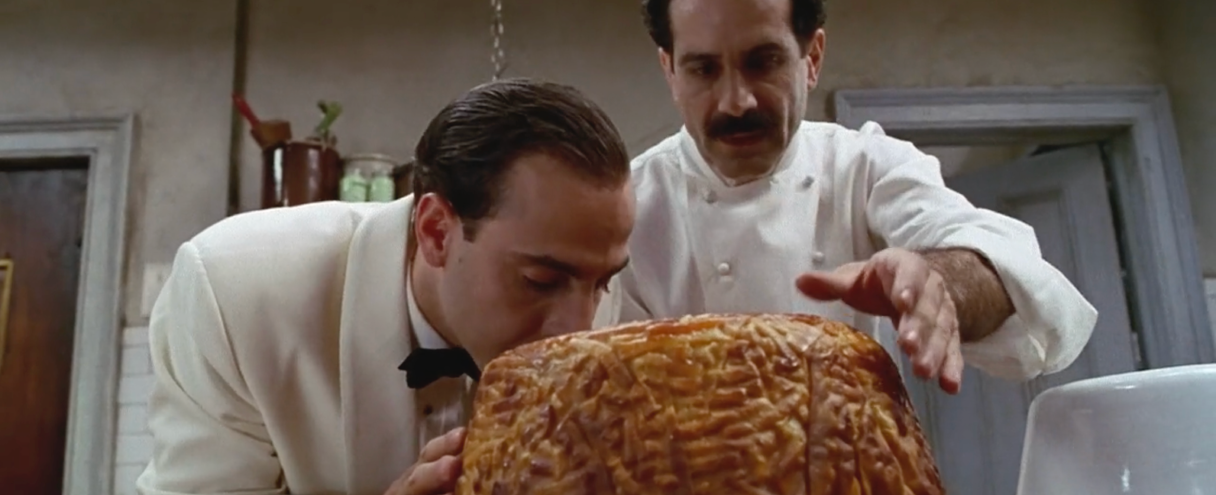
Iconic hook: The creation of the timpano, a massive, insanely complex baked pasta drum that serves as the ultimate symbol of Primo's genius and the brothers' fragile, desperate hopes.
4. Chef
Carl Casper is a critically acclaimed head chef at a prestigious Los Angeles restaurant who has lost his creative fire. He is constantly suffocated by a rigid, risk-averse owner who demands he cook the same safe, decade-old menu night after night just to keep the tables full. When a prominent food critic comes in, Carl is blocked from serving his innovative new dishes, resulting in a scathing review and a highly public, viral meltdown in the middle of the dining room.
Stripped of his job and his reputation, Carl goes back to his roots. He buys a dilapidated food truck, cleans it of grease, and embarks on a cross-country road trip with his estranged son and his fiercely loyal line cook. The film brilliantly shifts from the ego-driven, sterile environment of fine dining to the pure, tactile joy of making deeply satisfying street food.
Iconic hook: The scenes of Carl meticulously preparing the perfect Cubano sandwich or teaching his son the sacred line-cook rule of never serving burnt food are absolute love letters to the craft of cooking.
5. The Menu
A darkly comedic, satirical thriller set on a secluded island where the enigmatic Chef Julian Slowik runs Hawthorn, an absurdly expensive fine-dining temple. A hand-picked group of elite guests, including a washed-up movie star, pretentious food critics, and tech bros who care more about status than taste, arrive for a highly conceptual tasting menu. However, one guest, the cynical and unpretentious Margot, wasn't on the original guest list.
As the evening progresses, the meticulously choreographed courses turn increasingly sinister. The film darkly dissects the snobbery of the fine-dining ecosystem, revealing the chef's deep-seated hatred for his entitled clientele and the industry that destroyed his passion.
Iconic hook: The terrifyingly blind obedience of the kitchen staff — chanting "Yes, chef!" like a cult — and the moment a simple, perfectly executed cheeseburger becomes the ultimate ideological weapon in a room full of edible foams and conceptual art.
6. Party Down
A brilliant, cringe-inducing comedy that captures the soul-crushing reality of event catering better than anything else on television. The series follows a team of Los Angeles cater-waiters, a mix of aspiring actors, failed writers, and delusional dreamers, who are all working for Party Down catering while waiting for their big break in Hollywood.
Each episode revolves around a different gig: a chaotic singles mixer, a backstage concert VIP room, or an insufferable producer's house party. The genius of the show lies in the sharp contrast between the oblivious, wealthy guests and the bitter, exhausted staff passing the hors d'oeuvres. It painfully illustrates the "invisible servant" dynamic.
Iconic hook: The moment the staff put on their signature pink bowties, they cease to be humans to the clients. The gossipy, backstabbing ecosystem in the kitchen staging area is the most accurate depiction of transient hospitality labor ever filmed.
Why Restaurant Stories Travel So Well
Restaurant stories are not just niche entertainment for food nerds. Some of the best restaurant movies and TV shows have traveled far beyond people who know the difference between a sauté station and garde manger.
Take The Menu. On paper, it is a weird sell: a dark fine-dining satire about tasting-menu culture, class resentment, chef ego, and a cheeseburger with more emotional intelligence than most of the guests. Still, the movie earned roughly $79.6 million worldwide on a reported budget of $30 million. That is not exactly a tiny insiders-only joke for people who read restaurant reviews recreationally.
The Bear went even further. It turned kitchen anxiety, staff conflict, grief, and service pressure into mainstream television, then won 21 Primetime Emmy Awards, including Outstanding Comedy Series, and 5 Golden Globes.
A show built around ticket printers, family trauma, and operational collapse became one of the most talked-about series of its era. Apparently, “corner!” and “yes, chef” had more cultural range than anyone expected.
The same pattern shows up across the genre. Chef helped romanticize the food truck as a creative reset and understood early on that social media could destroy a chef’s reputation and then rebuild demand. Big Night, released in 1996, remains one of the essential movies about the restaurant industry, especially for anyone who has ever watched culinary ideals crash into rent, payroll, and empty tables.
Waiting..., released in 2005, became a cult reference point for front-of-house workers who recognized the fake smiles, customer grudges, and staff-only chaos behind casual dining. And Party Down widens the frame beyond restaurants entirely: it is a catering show, but its portrait of Los Angeles cater-waiters nails hospitality labor, invisible service work, and the strange emotional economy of being paid to make someone else’s event feel effortless.
That is why these stories work. Realistic restaurant movies do not need to get every kitchen detail perfect. The best ones understand the pressure system: food, ego, money, labor, guests, timing, and the constant possibility that one small mistake can turn the whole shift sideways.